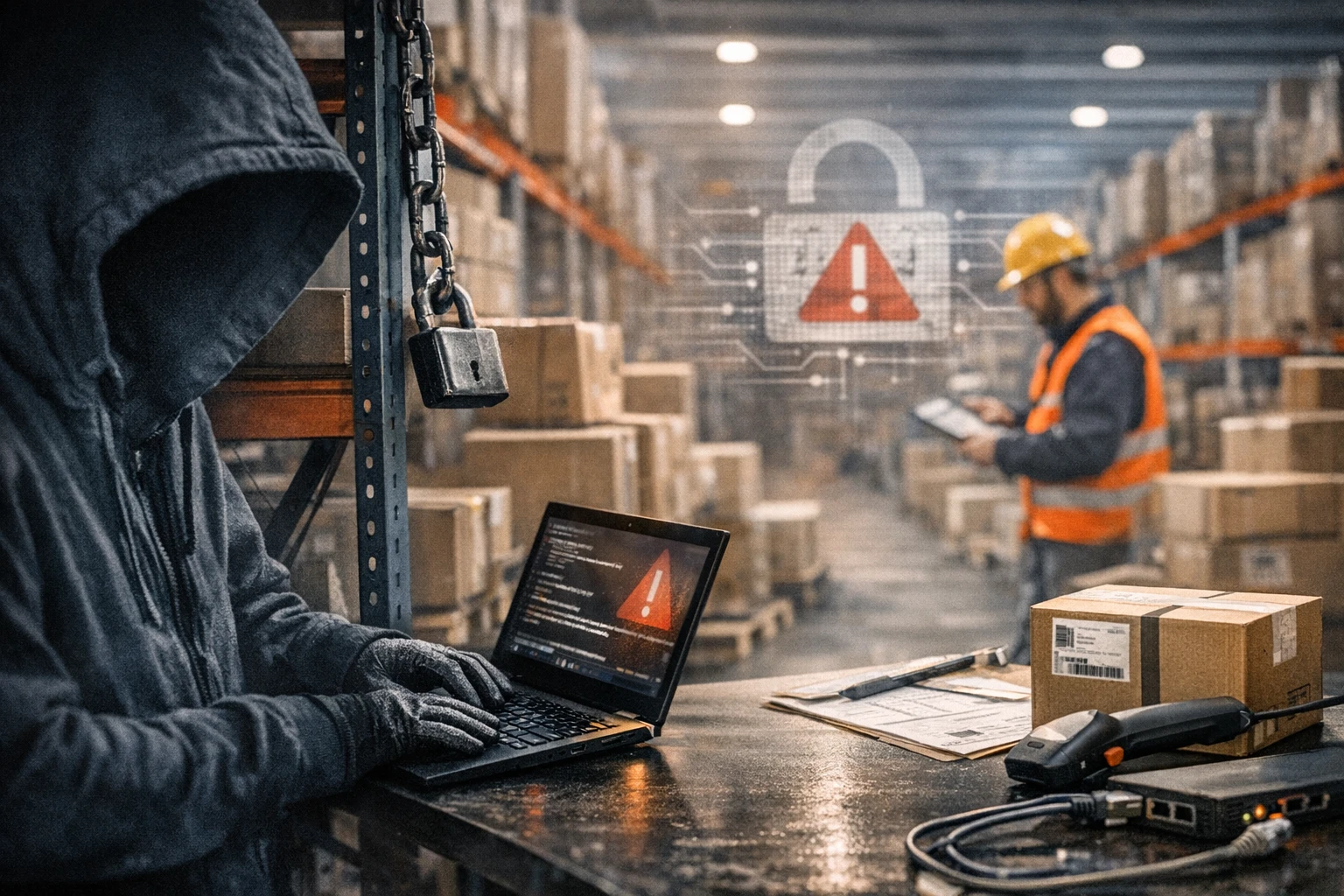
The Quiet Danger Lurking in Your Supply Chain (And Why Your Business Might Be the Weak Link)
When we talk about cyber attacks, most people picture big companies: banks, tech giants, NHS trusts, global manufacturers.
But in 2026 the attackers are going after SMEs — because they know something most businesses don’t want to admit: A chain is only as strong as its weakest link. And in many industries, the weakest link is the small supplier.
If you work with larger organisations (or supply them), here’s the uncomfortable truth: If attackers can’t breach your customers… they’ll try breaching you instead. And they’ll use your trusted connection to move sideways into bigger targets.
Let’s break down why SMEs are now at the centre of supply‑chain cyber attacks — and what you can do to strengthen your defences before someone uses you as a stepping stone.
🧩 Why SMEs Are Being Targeted in Supply Chain Attacks
Attackers love SMEs because:
1. You hold valuable access
Many SMEs have:
- VPN access
- Portal access
- Supplier logins
- Shared folders
- API integrations
- Email trust relationships
These access points are gold mines for attackers.
2. SMEs often have weaker security controls
Not because they don’t care — but because:
- Budgets are tight
- IT is stretched
- Security feels “big‑business”
- Legacy systems linger longer
- Cyber Essentials sometimes gives a false sense of security
Attackers know this. And they exploit it ruthlessly.
3. Your email domain is trusted by bigger organisations
If a phishing email comes from a known supplier, staff are far more likely to open it. This is how attackers launch:
- Fraudulent invoices
- Malware‑laden attachments
- Supplier impersonation attacks
- Payment redirection schemes
4. SMEs often rely on outdated remote access
Remote desktop exposed to the internet, old VPN appliances, unmanaged devices – attackers LOVE these.
5. You may not notice you’ve been compromised
SMEs often lack:
This gives attackers weeks (sometimes months) to quietly gather access.
🚨 Real‑World Supply-Chain Cyber Attacks Example (Simplified)
Here’s how a typical attack plays out:
- Attacker compromises a small supplier’s mailbox.
- They watch email threads for invoice conversations.
- They insert a fake invoice with “updated bank details.”
- The big customer pays the attacker instead of the legitimate supplier.
- The SME gets blamed.
- The relationship is damaged — sometimes forever.
And that’s just the financial risk. The reputational damage? Far worse.
🛑 Are YOU the Weak Link? Quick Self‑Check
If any of these make you wince, you may be exposing your supply chain:
- Still using legacy antivirus instead of EDR
- No conditional access
- No multi‑factor authentication for ALL accounts
- Staff not trained on modern phishing tactics
- Shared passwords (even occasionally)
- Using Teams/SharePoint access without governance
- Allowing unmanaged personal devices
- No centralised logging or monitoring
- Using old VPN tech or open RDP
If you tick even 2–3 of these, an attacker can use you as an entry route.
🛡️ How SMEs Can Strengthen Their Supply Chain Defences in 2026
Here’s what SMEs should be doing right now – and yes, every single action below is achievable even for small businesses:
1. Deploy EDR instead of traditional antivirus
Legacy AV won’t catch modern lateral‑movement attacks. EDR solutions like SentinelOne detect:
- Credential theft
- Privilege escalation
- Lateral movement
- Ransomware activity
2. Enforce MFA everywhere — no exceptions
Remote access, portals, email, admin accounts — everything.
3. Apply Conditional Access policies
Block:
- Unknown countries
- Old protocols
- High‑risk sign‑ins
- Non‑compliant devices
- Legacy authentication
4. Clean up and govern your data
If everyone has access to everything, attackers will too.
Use proper Teams/SharePoint governance and least‑privilege access.
5. Monitor your environment
Whether via a SOC service, Microsoft Defender SIEM features, or a partner like us — you need eyes on your environment 24/7.
6. Formalise supplier‑access policies
If your business connects to another organisation:
- Use documented access processes
- Rotate credentials
- Segment networks
- Remove old accounts and unused access
Your partners expect this in 2026.
7. Train your staff regularly
Not once a year.
Not “when we remember.”
Monthly micro‑training + phishing simulations are the minimum.
🔗 External Link
For broader context on supply chain cyber‑risk trends, the UK’s NCSC provides excellent guidance: https://www.ncsc.gov.uk/collection/supply-chain-security
📣 If you are weak, get help!
Supply-chain cyber attacks are now one of the fastest‑growing threats facing UK SMEs – and attackers are specifically targeting businesses your size because they know you hold the keys to bigger organisations.
If you want to strengthen your defences, protect your customers, and avoid being the weak link, we can help.
Talk to us today about supply‑chain security for SMEs – and let’s make your business an asset, not a liability.